Choosing the best outdoor cushion fabric in 2026 requires more than comparing colors and prices. A beautiful textile can fade quickly, absorb moisture, or lose its shape after one wet season. This guide examines practical fabric choices, including solution-dyed acrylic, olefin, polyester, and performance blends. Each option has different strengths in sunlight, rain, cleaning, comfort, and cost.
The focus is how to make outdoor cushions with weather-resistant fabrics that remain useful in real outdoor conditions. Professional cushion makers usually begin with accurate measurements, breathable foam, durable thread, and carefully finished seams. They also consider drainage, because trapped water can create unpleasant odors and shorten cushion life. Small details matter. A zipper protected beneath a flap may perform better than an exposed closure. A slightly sloped cushion can shed rain more effectively than a flat design.
I have learned that fabric labels do not tell the whole story. Laboratory ratings are valuable, but installation, maintenance, and local climate can change the result. A fabric that performs well beside a dry pool may struggle on a shaded, humid balcony. That lesson matters. Readers should compare manufacturer specifications, test a small sample, and inspect stitching before starting a complete set. Even experienced makers make mistakes, especially when measuring foam or estimating seam allowance. This article offers reliable methods, realistic comparisons, and practical cautions for creating cushions that feel comfortable, look refined, and withstand everyday outdoor use.
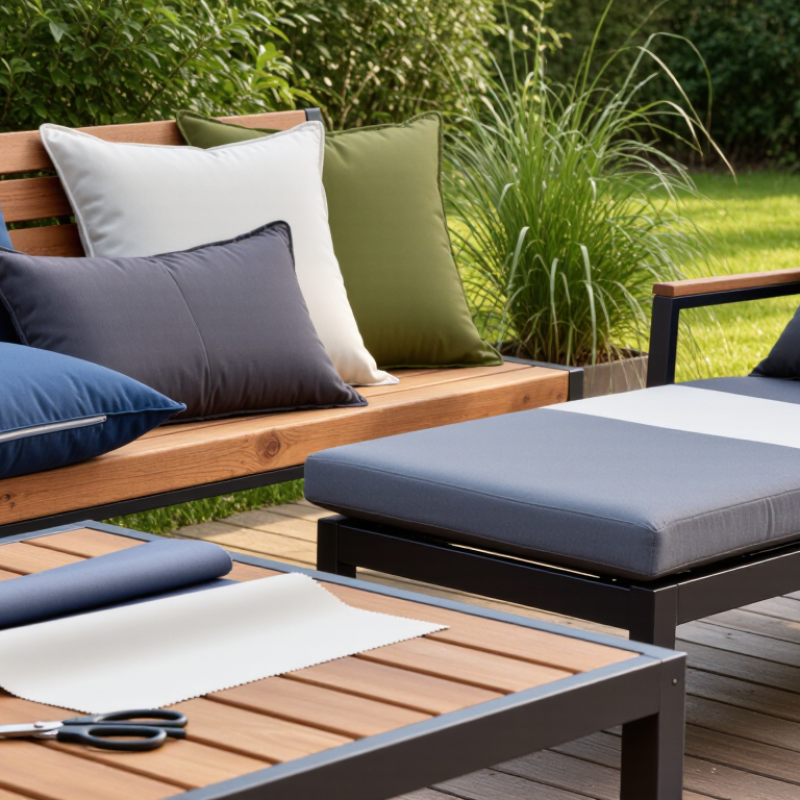
Choosing the best outdoor cushion fabric in 2026 starts with your climate, not a trend. Strong sunlight demands excellent UV resistance and stable color performance. For exposed patios, solution-dyed acrylic remains a practical choice. Olefin can work well for dry, sunny areas and lighter furniture. Polyester often costs less, but quality varies widely.
Check the fabric’s water behavior carefully. Water-resistant fabric sheds light rain, while waterproof fabric blocks moisture more completely. Cushions still need breathable covers, open seams, and fast drainage. Look for tightly woven material with abrasion resistance for busy seating areas. A textured weave can hide dust, but deep patterns may trap pollen and sand.
Touch the fabric before buying whenever possible. It should feel firm, not overly thin or slippery. Ask for cleaning instructions, UV test results, and resistance ratings from the seller. Light colors stay cooler, though they may show food stains sooner. Dark colors can fade more visibly in strong sunlight. I still make this mistake: choosing softness before checking drying time. A cushion that remains damp after a storm can develop unpleasant odors, even when its surface looks attractive. Test a small sample outdoors for several weeks, because product descriptions rarely show every seasonal weakness.
| Fabric Type | Typical Fiber or Construction | UV Resistance | Water and Mildew Performance | Breathability | Abrasion Durability | Recommended Construction | Best Outdoor Use | Main Advantages | Important Limitations |
|---|---|---|---|---|---|---|---|---|---|
| Solution-Dyed Acrylic | Acrylic fibers are colored before they are spun into yarn, helping the color extend through the fiber. | Quick-drying and resistant to moisture-related mildew when properly cleaned and dried. | Good; allows air movement and is comfortable in warm weather. | Use tightly woven fabric with UV-resistant thread, outdoor-grade zipper, and quick-dry cushion foam. | Patios, poolside seating, rooftop terraces, and cushions exposed to strong sunlight. | Strong color retention, soft hand feel, good weather resistance, and long service potential. | Usually costs more than standard polyester; water resistance depends on the weave and finish. | ||
| Solution-Dyed Olefin | Polyolefin-based fibers colored during fiber production rather than only on the fabric surface. | Low moisture absorption and good resistance to mildew when the cushion is kept ventilated. | Good, especially in medium-weight woven constructions. | Choose a dense weave, UV-stable thread, and a removable cover for regular washing. | Everyday outdoor seating, dining cushions, benches, and sunny garden furniture. | Lightweight, colorfast, moisture resistant, and generally easy to clean. | May feel less soft than acrylic; some fabrics can become brittle after prolonged heat and UV exposure. | ||
| Solution-Dyed Polyester | Polyester yarns with color incorporated into the fiber, commonly used in coated or tightly woven fabrics. | Dries reasonably quickly; performance improves with a durable water-repellent finish. | Moderate; depends on fabric weight, coating, and weave density. | Use a tightly woven face fabric, weather-resistant zipper, and a breathable cushion insert. | Covered patios, balconies, seasonal cushions, and projects requiring a wide range of colors. | Good balance of cost, strength, color availability, and ease of care. | Uncoated or low-quality polyester can fade faster and may retain heat in direct sun. | ||
| PVC-Coated Polyester | Polyester base cloth covered with a polyvinyl chloride layer for increased surface protection. | Very high surface water resistance and easy wipe-clean maintenance. | Use sealed seams or welded seams where appropriate, plus ventilation openings to reduce trapped moisture. | Commercial seating, marine-adjacent areas, children’s seating, and cushions exposed to frequent spills. | Highly water resistant, stain resistant, abrasion resistant, and simple to clean. | Can feel warmer and less flexible; trapped condensation may encourage mildew inside the cushion. | |||
| Textilene-Style Mesh | Coated synthetic yarns arranged in an open or mesh construction. | Drains and dries quickly because of its open structure. | Use reinforced edges, UV-resistant thread, and a foam design that permits drainage. | Pool furniture, sling seating, outdoor back cushions, and high-humidity environments. | Excellent airflow, fast drainage, strong abrasion resistance, and low maintenance. | Less plush and less private than solid fabrics; unsuitable when a soft, fully upholstered appearance is required. | |||
| Cotton Canvas | Woven natural cotton fibers, sometimes treated with a water-repellent finish. | Absorbs moisture and can mildew if stored damp or exposed to frequent rain. | Use only with a breathable water-repellent treatment, removable cover, and protected storage. | Covered porches, temporary seasonal cushions, and low-exposure decorative projects. | Natural appearance, comfortable feel, good breathability, and easy sewing. | Fades and absorbs water more readily than synthetic outdoor fabrics; requires more maintenance. | |||
| Recycled Polyester Outdoor Fabric | Polyester fibers produced from recycled plastic feedstock and formed into woven or coated fabric. | Comparable to other polyester fabrics when the weave and protective finish are suitable for outdoor use. | Moderate to good, depending on fabric weight and coating. | Choose certified recycled content where documentation matters, plus durable thread and a washable cover. | Residential patios and projects where material sourcing is an important design consideration. | Can reduce reliance on virgin polyester while retaining familiar polyester performance. | Recycled content alone does not guarantee UV, water, or mildew performance; verify the complete fabric specification. |
Selection note: For most fully exposed cushions in 2026, prioritize solution-dyed acrylic or solution-dyed olefin. Evaluate the complete system—not fabric alone—including seam construction, thread, zipper, foam drainage, water-repellent finish, cleaning instructions, and storage conditions.
Start with sunlight, humidity, and rainfall. Strong sun requires excellent UV resistance and stable color. Dry, sunny areas may suit olefin. Exposed patios often benefit from solution-dyed acrylic. Polyester can work, but quality varies.
Water-resistant fabric sheds light rain briefly. Waterproof fabric blocks moisture more completely. Neither option protects every seam. Zippers and open stitching can still admit rain. Check drainage carefully.
Pour a small amount of water onto the surface. The drops should bead briefly. If water disappears immediately, protection may be limited. Test the seams separately. Small tests reveal useful flaws.
Choose a tightly woven fabric with abrasion resistance. It usually handles repeated movement better than loose decorative material. Dragging cushions across rough wood causes extra damage. Check rub-resistance ratings when available.
Touch the fabric before buying. It should feel firm, breathable, and not overly slippery. Heavy coatings may block rain but reduce airflow. That trade-off becomes obvious after twenty minutes in direct sun. Comfort still matters.
Light colors usually stay cooler in sunlight. However, they can show food stains quickly. Dark colors may hide dirt at first but show fading more clearly. Textured surfaces can disguise dust. Deep patterns may trap pollen and sand.
Place a sample outdoors for several days, preferably for a few weeks. Observe fading, heat buildup, and drying after evening moisture. Leave it near the intended seating area. Product descriptions miss seasonal weaknesses.
Ask for cleaning instructions and resistance ratings. Check whether the cover supports fast drying and practical drainage. Remove spills before they settle. Inspect seams after storms. I sometimes choose softness first, then regret the slow drying time.
Choosing the best outdoor cushion fabric in 2026 means balancing durability, weather resistance, comfort, and appearance. The ideal material should withstand sunlight, moisture, temperature changes, and frequent use while remaining soft enough for relaxing. This guide explains how to compare fabric strength, water resistance, breathability, color stability, and ease of cleaning. It also covers how to prepare the fabric, foam, thread, fasteners, and other materials before beginning the project.
The step-by-step section shows how to measure cushions accurately, cut fabric, sew neat seams, add closures, and create a secure, comfortable fit. Readers will learn how to make outdoor cushions with weather-resistant fabrics while avoiding common problems such as loose covers, weak seams, and trapped moisture. Finally, the guide provides practical maintenance advice, including regular cleaning, proper drying, seasonal storage, and signs that indicate when the fabric or cushion should be repaired or replaced.

 Harbor Textiles