How to Choose Fabrics for Winter Coats?

Time:2026-11-04 Author:Sienna
0%

Choosing a winter coat fabric is not simply a matter of picking the warmest option. The best choice depends on your local weather, daily routine, and willingness to care for the garment. If you are learning how to choose fabrics for winter coats, start with the conditions you actually face. A damp, windy commute calls for different protection than a dry walk through freezing air. Small details matter. Check the fabric’s weight, weave, lining, and care label, not just its name.

Wool offers warmth and breathability, while tightly woven synthetic shells can help block wind and light rain. Down and some synthetic fills provide insulation, but the outer fabric must protect that insulation from moisture and wear. Run a hand over the cloth: does it feel dense, scratchy, or surprisingly thin? Then consider where seams, cuffs, and pockets may take the most friction. No single fabric suits everyone. A heavy coat may feel reassuring in a store, then become tiring on a crowded train. Fabric labels also cannot tell the whole story; construction and fit affect comfort just as much. This guide will compare common coat materials, explain their trade-offs, and point out what to inspect before buying. Even careful research has limits, so think about how you will use the coat—not only how it looks on a hanger.
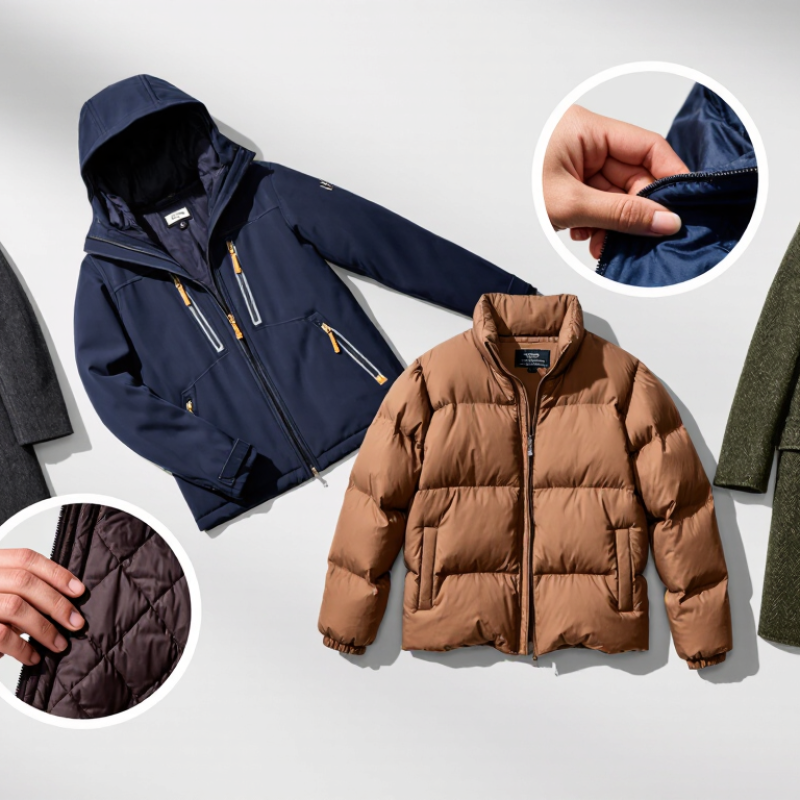
How to Choose Fabrics for Winter Coats?

Set insulation targets: 1 clo equals 0.155 m²·K/W

A useful winter-coat target starts with clo: 1 clo equals 0.155 m²·K/W of thermal resistance. This unit describes clothing insulation, not a fabric’s warmth in isolation. A coat’s performance depends on its shell, lining, trapped air, fit, and the layers worn underneath. A roomy coat can hold warm air, but excessive space may let cold drafts circulate. Numbers need context.

Set a target for the conditions you expect. A coat for a windy, near-freezing commute needs different insulation from one worn during brisk walking. Activity creates body heat, while wind and dampness can make a fabric feel colder. Compare measured thermal resistance when available, and check whether figures refer to the fabric alone or the complete garment. A clo value is a planning guide, not a comfort guarantee; personal sensitivity and fit matter. I would avoid choosing a coat from one number alone.

Tips: Start with your base layers, then estimate the coat’s added insulation. Test the fit with a sweater and raise your arms; tight shoulders can compress layers and reduce trapped air. Check cuffs and the collar for gaps. If you tend to overheat, a slightly lower insulation target may be more practical.

Compare wool, down, and synthetic insulation by fiber and fabric construction

A winter coat’s warmth comes from both its insulation fiber and the fabric holding it. Wool fibers have natural crimp that traps still air, while a dense wool coating can also slow wind. A tightly woven melton feels smooth and protective; a loose knit may feel softer but let more air through. Check the lining and seams, too. Small gaps can make a warm fabric feel drafty. Feel the difference.

Down uses clusters of fine filaments that loft and trap air with little weight. Its performance depends on cluster quality, fill amount, and construction. Sewn-through channels can create cold lines, while box-shaped baffles allow more even loft. The outer shell should be tightly woven enough to limit drafts and escaping feathers. Down loses much of its loft when wet, so damp conditions deserve thought.

Synthetic insulation uses fine manufactured fibers, often arranged as batting or loose fill. Batting can provide even coverage; loose fill needs well-made compartments to prevent shifting. It usually keeps more insulating ability when damp than down, though it may feel heavier for similar warmth. I wouldn’t choose by fiber name alone—that shortcut misses fit, shell fabric, and intended weather. Check the coat’s construction, not just its label.

How to Choose Fabrics for Winter Coats? Compare Wool, Down, and Synthetic Insulation by Fiber and Fabric Construction

Material Fiber and Insulation Structure Warmth and Weight Performance When Damp Common Fabric Construction Best Suited For Care Considerations
Wool Crimped animal-hair fibers trap pockets of air. Wool may be used as a woven coat fabric, a dense felted fabric, or as a layer in a multi-material garment. Warm and durable, but generally heavier and less compressible than down at comparable warmth. Can retain useful warmth when slightly damp, though it absorbs moisture and may feel heavy or dry slowly. Tightly woven melton, twill, or boiled wool can reduce airflow. A lining can improve comfort and help the coat slide over clothing. Wool fabric alone is not necessarily windproof or waterproof. City wear, everyday coats, and cool conditions where a structured appearance and natural-fiber feel are priorities. Follow the garment label. Some wool fabrics require dry cleaning or gentle washing; agitation and heat can cause shrinkage or felting.
Down Clusters from waterfowl create loft by holding still air. The clusters are enclosed in fabric compartments, commonly called baffles. Typically offers excellent warmth for its weight and compresses well. Actual warmth depends on fill power, fill amount, loft, and garment design. Loft can collapse when down becomes wet, reducing insulation. It takes longer to dry than many synthetic fills; a water-resistant finish may help with light exposure but is not waterproofing. Box-wall baffles reduce cold spots but add bulk and complexity. Sewn-through quilting is lighter and simpler, but stitching can create narrow areas with less insulation. A tightly woven shell helps limit wind and down leakage. Cold, relatively dry conditions and activities where low weight and packability matter. Use the care instructions. Thorough drying is important after washing because damp clusters can clump; professional cleaning may be recommended.
Synthetic insulation Usually made from polyester fibers formed into sheets or loose fills. Fine fibers and lofted structures trap air without relying on down clusters. Can provide substantial warmth, though it is generally bulkier and heavier than down for comparable warmth. Performance varies by fiber design and fill amount. Usually maintains more insulating ability than down when damp and tends to dry faster, though it can still become wet and lose some warmth. Often supplied as a continuous sheet or lofted batting, held in place by quilting or garment compartments. A wind-resistant shell improves performance; a separate waterproof layer may be needed in wet weather. Changeable, damp conditions; frequent wear; and situations where easier care is useful. Many garments are machine washable, but the care label should guide washing and drying. Avoid excess heat, which can damage fibers or shell coatings.

How to compare coats: No fiber alone determines warmth. Consider insulation amount and loft, baffle or quilting design, shell wind resistance, fit, lining, and intended activity. Water-resistant and waterproof describe different levels of protection; check the garment’s specifications.

Measure thermal and vapor resistance using ISO 11092

Choosing a winter-coat fabric by touch alone can mislead. A dense, soft swatch may feel warm, yet trap perspiration during a brisk walk. ISO 11092:2014 measures both thermal resistance, Rct, and water-vapour resistance, Ret, using a sweating guarded hotplate. Numbers matter.

In a laboratory report, higher Rct indicates greater resistance to heat loss. Lower Ret indicates less resistance to water-vapour transfer. Read both values together: a fabric with strong insulation but high vapour resistance may feel clammy during activity. ISO 11092 specifies a test method, not a universal pass score, so compare fabrics tested under the same conditions. Ask for the report’s units and test setup, including whether it tested one layer or the finished fabric assembly.

For a coat worn in cold, damp weather, compare the shell, lining, and any membrane as a system where possible. A single-layer swatch cannot fully predict the finished garment’s comfort. Check that the report identifies the tested side and construction; coatings and face orientation can affect results. The standard gives measurable evidence, but wind, fit, and layering still matter. A useful report narrows the choice, not settles it.

Assess airflow and water resistance with ISO 9237 and ISO 811

For winter coats, compare airflow and water resistance rather than relying on fabric weight alone. ISO 9237:1995 measures air permeability and reports airflow through a defined fabric area under a stated pressure difference, often 100 Pa.

A lab report might show 18 mm/s at 100 Pa; that is an illustrative result, not a universal target. Lower airflow can reduce wind penetration, but a very tight shell may feel clammy during a brisk walk. Small details matter: compare fabrics tested at the same pressure, with the same face exposed and similar conditioning.

ISO 811:2018 measures resistance to water penetration using hydrostatic pressure, commonly reported as centimetres of water. A higher result generally means greater resistance in this test, but it does not guarantee a dry coat: seams, closures, and wear can still let water in.

Ask suppliers for the actual test values, method, and sample details, not just “water-resistant.” I would not judge a whole coat from one swatch.

Test the finished garment too, especially after flexing or laundering, and consider both standards together: a useful winter fabric balances limited air passage with enough water resistance for expected conditions.

Match fabric weight, durability, and care requirements to the coat’s intended use

Choose fabric for the coat’s actual job: a city commute, wet-weather walks, or standing outdoors for hours. A heavier cloth can feel warmer, but weight alone does not predict insulation; fiber, weave, lining, and fit matter too. Textile Exchange’s Materials Market Report 2024 estimated global fiber production at 124 million tonnes in 2023, with polyester making up 57%. That scale describes supply, not quality. Polyester can suit a hard-wearing outer shell, but construction and finishing determine how well it resists wind and rain.

For frequent use, check abrasion results from a recognized test, such as the Martindale method in ISO 12947, and compare fabrics tested under the same conditions. No single score guarantees years of wear. For a wool coat, inspect the weave and seams, then check whether the care label allows home cleaning or requires professional care. A coat that needs frequent specialist cleaning may not fit a muddy, everyday routine. I still find fabric weight easy to overvalue; a dense, well-finished cloth can outperform a heavier, loosely woven one.

Tips: Match care to your habits. Rub a sample gently, check its label, and ask for test results before choosing. Don’t assume “heavier” means “warmer.”

How to Choose Fabrics for Winter Coats

Typical fabric weights vary by weave, finish, and construction. Use weight as a starting point, then consider durability and care.

Choosing by use: Wool coating offers warmth and structure but often needs careful cleaning. Cotton canvas is sturdy and may be machine-washable, depending on its finish. Fleece is light and easy to wash, though it can pill. Synthetic shell fabrics are lightweight and practical for active or wet-weather coats; follow the garment care label. Weight ranges are approximate, and heavier fabric does not automatically mean greater warmth.

FAQS

What makes wool, down, and synthetic insulation warm?

Wool’s naturally crimped fibers trap still air. Down clusters create loft with little weight. Synthetic fibers are often arranged as batting or loose fill. Feel the difference.

Does fabric construction affect a coat’s warmth?

Yes. Dense wool cloth can slow wind, while a loose knit may let more air through. Check the lining, seams, and shell too. Small gaps matter.

Why do down baffles matter?

Sewn-through channels can create colder lines. Box-shaped baffles help distribute loft more evenly. Down also loses much of its loft when wet.

How does synthetic insulation compare in damp weather?

It usually retains more insulating ability when damp than down. It may feel heavier for similar warmth. Construction still matters.

What do Rct and Ret tell me?

Under ISO 11092, higher Rct indicates greater resistance to heat loss. Lower Ret indicates easier water-vapour transfer. Read both values together.

Can one laboratory swatch predict a coat’s comfort?

Not fully. Ask whether the report tested one layer or the finished fabric assembly. Fit, wind, and layering still matter.

What does ISO 9237 measure?

It measures air permeability through a defined fabric area at a stated pressure difference. Compare results tested under similar conditions. A tighter shell may reduce drafts but feel clammy during activity.

Does a high ISO 811 result guarantee a dry coat?

No. The test measures resistance to water penetration under hydrostatic pressure. Seams, closures, wear, and laundering can still affect performance. I wouldn’t judge the whole coat from one swatch.

Conclusion

How to choose fabrics for winter coats begins with defining the warmth the coat needs to provide. As a useful reference, 1 clo equals 0.155 m²·K/W of thermal resistance. Compare wool, down, and synthetic insulation not only by fiber type but also by construction: loft, layering, and fabric density all affect warmth, weight, and comfort. A suitable choice balances insulation with breathability and the coat’s expected weather conditions.

Use standardized tests to compare performance rather than relying on fabric descriptions alone. ISO 11092 measures thermal and water-vapor resistance, while ISO 9237 evaluates air permeability and ISO 811 assesses resistance to water penetration. Finally, match the fabric’s weight, durability, and care requirements to its intended use, whether the coat is for everyday wear, active movement, or prolonged exposure to cold and wet conditions.

Sienna

Sienna

Sienna is a skilled marketing professional with a deep expertise in our company’s core products and services. With a passion for innovation and detail, she plays a pivotal role in crafting insightful blog posts that not only highlight the unique features of our offerings but also provide valuable......