Choosing fabric for a child’s toy is not simply a matter of softness, color, or price. Parents may touch a plush rabbit and notice its smooth surface, but hidden risks can remain inside the fibers, dyes, coatings, seams, and stuffing. This introduction explores how to choose safe fabrics for children’s toys, especially when selecting cotton, linen, bamboo blends, felt, fleece, or recycled materials. Each option has strengths and limitations.
Textile safety consultant Dr. Sarah Collins explains, “A fabric feels safe only after its fibers, dyes, finishes, and manufacturing history have been considered.” Her point is practical. Look for clear fiber information, washable construction, colorfast dyes, and evidence of restricted-substance testing. A toy should not release strong chemical odors after opening. It should also resist excessive shedding, loose threads, and surface peeling.
Details matter.
For example, untreated cotton may feel breathable, but it can shrink and become rough after repeated washing. Fleece offers warmth and durability, yet some products may shed tiny fibers. Felt can hold its shape, although low-quality versions may contain irritating binders. Certifications can provide useful evidence, but they are not a substitute for checking seams, labels, and care instructions.
Perfect choices are rare. Even certified fabric requires thoughtful design and supervision. Manufacturers should test the finished toy, not only the incoming fabric. Parents may also need to reconsider assumptions about “natural” materials, since natural does not always mean harmless. Reliable sourcing, transparent documentation, and real-world washing tests create stronger confidence. This guide examines those decisions carefully, with safety remaining more important than appearance.
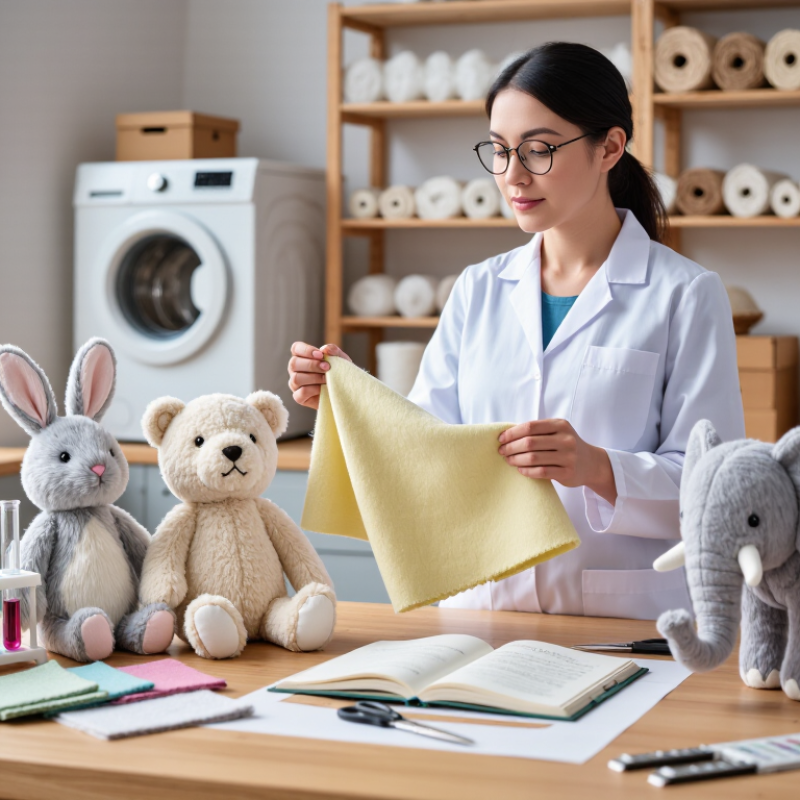
What Makes a Fabric Safe for Children’s Toys in China
A safe toy fabric should feel soft, remain stable, and resist shedding after repeated washing. Cotton, polyester, and blended fabrics can all be suitable when their quality is verified. The fiber name alone proves little. Check fabric weight, surface strength, colorfastness, and shrinkage before production. A loose seam or fuzzy surface can create a practical hazard for young children. Dye selection also matters. Fabrics should be screened for restricted substances under applicable Chinese and destination-market requirements. Do not rely only on a supplier’s verbal promise. Request recent test reports from a competent, independent laboratory.
Clean production conditions support safer results. Inspect storage areas for dust, moisture, insects, and mixed chemical materials. Ask how fabric lots are identified and traced. A small retained sample can help investigate problems later. Wash testing should copy real use, including warm water, detergent, rubbing, and drying. Some printed fabrics look excellent when new, then crack after two washes. That failure is easy to miss. It is also expensive.
No fabric choice is perfect. A very soft surface may pill quickly, while a durable finish may change the hand feel. This trade-off deserves a documented decision, not guesswork. Designers, factories, and quality inspectors should review the final toy together. Test the finished product, not only the fabric roll. Safety can change after cutting, stuffing, printing, and stitching.
| Fabric Type | Typical Toy Applications | Key Safety Advantages | Potential Risks or Limitations | Recommended Safety Checks | Suitability for Children's Toys |
|---|---|---|---|---|---|
| 100% Cotton | Soft dolls, plush toys, comforters, fabric books, toy clothing and sensory toys | Soft, breathable, washable and widely available; suitable for direct skin contact when properly processed | May shrink or lose color if poorly finished; dyes, printing inks, formaldehyde residues and heavy metals must be controlled | Confirm fiber composition, colorfastness, pH, formaldehyde, extractable heavy metals, saliva resistance and small-part security under the applicable toy standard | Highly suitable |
| Organic Cotton | Baby toys, teething toy covers, plush toys, comfort objects and premium soft toys | Uses certified organic agricultural production; soft hand feel and good breathability when made with suitable finishing materials | The word “organic” alone does not prove chemical safety; dyes, finishes, thread, stuffing and accessories may still require separate testing | Verify a valid organic-content certificate where an organic claim is made, and test the finished toy rather than relying only on the raw-fabric certificate | Highly suitable |
| Cotton Muslin | Lightweight dolls, toy blankets, swaddling-style play accessories and breathable fabric toys | Light, breathable and easy to wash; open structure can provide a soft texture for supervised sensory play | Loose weaves can fray, tear or create long threads; excessive shrinkage may affect shape and seams | Check seam strength, abrasion resistance, fraying, loose threads, dimensional change after washing and colorfastness | Suitable with construction controls |
| Polyester Fleece | Plush animals, blankets, winter toy clothing and soft sculpted surfaces | Durable, dimensionally stable, quick-drying and resistant to repeated washing; consistent surface appearance | Can shed fibers or pills if poorly manufactured; heat-sensitive and may retain finishes or dyes that require chemical testing | Check fiber shedding, seam strength, flammability, colorfastness, surface abrasion, pH and restricted substances in the finished toy | Suitable after testing |
| Linen or Linen-Cotton Blend | Fabric books, pretend-play accessories, dolls and decorative toy panels for older children | Plant-based fiber, breathable and relatively durable; linen blends can improve softness and reduce excessive wrinkling | Pure linen can be coarse, wrinkle easily and fray; stiff fibers and loose threads may be unsuitable for infants without additional construction controls | Check softness, edge finishing, seam durability, fraying, colorfastness, shrinkage and age appropriateness | Suitable with age-specific design |
| Hemp or Hemp-Cotton Blend | Durable toy bags, fabric books, role-play accessories and structured soft toys | Strong natural fiber with good wear resistance; blends can provide a softer surface than pure hemp | Pure hemp may feel rough and can have variable fiber quality; processing agents, dyes and surface finishes still require control | Check fiber composition, softness, abrasion, fraying, colorfastness, chemical residues and suitability for direct skin contact | Suitable mainly for older children |
| Bamboo Viscose | Soft plush surfaces, doll clothing and lightweight toy accessories | Soft, smooth and absorbent; can provide a comfortable surface when manufactured and finished correctly | Most bamboo textile is regenerated cellulose rather than mechanically processed bamboo fiber; chemical processing and finishing must be controlled | Confirm accurate fiber labeling and test the finished material for formaldehyde, pH, colorfastness, heavy metals and other restricted substances | Suitable after verified testing |
| Wool or Wool Blend | Felted shapes, educational toys, puppets and decorative craft components | Warm, resilient and useful for structured felt components; can hold shape well when securely assembled | May cause skin irritation or allergic reactions in sensitive children; loose fibers, small felt pieces and mothproofing chemicals require attention | Check fiber shedding, allergen-related considerations, dye safety, flammability, edge security and attachment strength of every component | Use with careful design and testing |
Tightly woven cotton is breathable, washable, and less likely to form loose loops. It feels simple. Check shrinkage after washing.
Polyester fleece is durable and holds color well. However, it can retain heat and shed fibers when worn. Inspect the surface carefully.
No. Natural fibers can still irritate skin or contain unwanted chemical residues. Wool may feel scratchy. Safety needs evidence and inspection.
Look for short pile, secure seams, and firmly attached trims. Avoid fluffy surfaces that pull apart easily. Loose threads need correction.
Rub the fabric repeatedly with a clean white cloth. Staining indicates possible dye transfer. Wet rubbing is more revealing.
Wash samples at least five times with mild detergent. Then inspect fading, pilling, shrinkage, seam strength, and exposed filling. Twist the wet fabric too.
Request fiber composition, dyeing records, batch-linked test reports, and laboratory details. Review production samples, not only small fabric swatches. Paperwork can miss problems.
Check formaldehyde, heavy metals, restricted dyes, and plastic softeners where relevant. Also inspect cords, decorations, seams, and printed surfaces. Softness alone proves little.
Compare first-run samples with bulk samples under strong light. Retain samples and record corrective actions. A dark patch may bleed later.
No. Testing reduces uncertainty but cannot predict every child’s behavior. My checklist may still miss something. Repeat inspections after washing and rough handling.
Choosing safe fabrics for children’s toys in China requires attention to material composition, softness, durability, and ease of cleaning. Parents and manufacturers should consider how to choose safe fabrics for children’s toys by selecting non-toxic, low-odor, skin-friendly materials with secure dyes and minimal loose fibers. Common options include organic cotton, certified polyester, plush fabrics, felt, and linen blends, depending on the toy’s purpose. Fabrics should be breathable for soft toys, strong enough for frequent handling, and resistant to pilling, tearing, and color fading.
Toy fabrics should also meet applicable Chinese safety requirements, including checks for harmful substances, flammability, color fastness, and small detachable parts. The ideal fabric depends on the toy type and child’s age: infants need softer, washable, and less hairy materials, while older children may use more textured or decorative fabrics. Before production or purchase, inspect fabric density, stitching compatibility, washing performance, surface stability, and test samples for repeated cleaning and daily use.

 Harbor Textiles