Choosing fabric for a pet toy is not just a style decision. The material affects how a toy feels, holds up to play, and responds to chewing, tugging, or washing. If you are asking “what fabrics are suitable for pet toys,” start with the animal’s size, play habits, and strength. A gentle cat batting at a soft toy has different needs from a powerful dog pulling on a rope. There is no single fabric that suits every pet.
This guide compares ten commonly used options, including cotton canvas, fleece, denim, and durable woven fabrics. Each has trade-offs. Canvas can feel sturdy, while fleece is soft and inviting; seams and construction still matter. A tough-looking toy can fray, and loose threads or filling may become hazards if swallowed. Small details matter. Check stitching, labels, and care instructions, and inspect toys often for tears or exposed stuffing. Supervise pets with new toys, especially if they chew intensely, and replace damaged items promptly. These precautions do not make any material risk-free. They help you make a more informed choice based on real play, not just a fabric’s reputation.
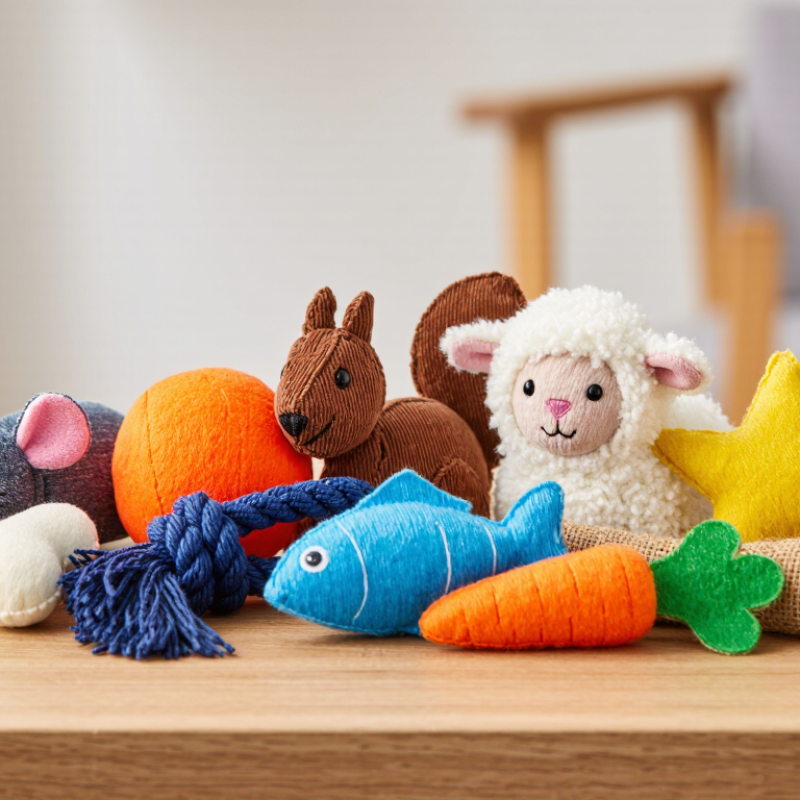
How to Evaluate Fabric Safety, Strength, and Comfort for Pet Toys
When evaluating fabric for a pet toy, look beyond softness. Check the weave, seams, and any attached trims. A tightly woven surface is less likely to shed loose threads during ordinary play. Cotton canvas and denim can feel sturdy, but their strength depends on fabric weight and stitching. Fleece feels gentle against the mouth, though deep piles may hide tears or collect dirt. Inspect the toy after washing, too. Fabric labels help, but they cannot guarantee safety. No fabric is chew-proof.
Match the material to the animal and its play style. A gentle fetcher may enjoy smooth, lightweight cloth; a persistent chewer needs close supervision and toys without loose loops, buttons, or dangling ribbons. Tug the seams lightly before play, then check for exposed stuffing, frayed edges, or swallowed-size scraps. Remove damaged toys. It is easy to overlook small tears. Washable fabric can help with hygiene, but follow care instructions and make sure the toy dries fully before use. Comfort matters as well: rough seams or stiff edges may rub a pet’s gums or paws. There is no perfect fabric for every pet, so observe how the toy wears in real play and adjust your choice.
Top 10 Best Fabrics for Pet Toys
A qualitative comparison of common toy fabrics for safety screening, strength, and comfort. Ratings are general guidance, not laboratory test results; fabric weight, weave, dyes, finishes, construction, and your pet’s chewing habits can change performance.
Scale: 1 = lower suitability, 5 = higher suitability. A higher safety-screening score does not mean a fabric is chew-proof or safe to swallow. Inspect toys regularly, supervise play, and replace damaged toys.
Natural Fabrics: Cotton, Canvas, Denim, Hemp, and Jute
Cotton, canvas, denim, hemp, and jute offer different textures for pet toys, but “natural” does not automatically mean safe to chew. Cotton feels soft and suits gentle play, while tightly woven canvas can better resist scraping paws and teeth. Denim’s twill weave adds structure, though exposed seams may still fray. Check toys often. Loose threads can be swallowed.
Hemp fibers are strong and have a slightly coarse feel; they can work well in tug toys when stitching is secure. Jute is rougher and may shed fibers, so it is a less suitable choice for pets that shred and swallow fabric. The same caution applies to cotton rope. Supervise play, and replace toys with torn seams or dangling strands. No fabric is perfect.
Textile Exchange’s Materials Market Report 2024
estimates that global fiber production reached about 124 million tonnes in 2023, with cotton making up roughly one-fifth. That industry figure describes textile production, not pet-toy safety or durability, so it cannot tell you which toy will last longest. In practice, inspect the weave, seams, and chew damage. A thick fabric can still fail at a weak seam; I would not rely on fiber type alone.
Soft and Synthetic Fabrics: Fleece, Felt, Polyester, Nylon, and Ripstop
Fleece feels gentle against a pet’s mouth and dries quickly after washing. Most fleece is polyester, so it can pill and hold odor when repeatedly damp. Textile Exchange’s Materials Market Report 2024 estimates global fiber production reached 124 million tonnes in 2023. Polyester made up about 57% of that total. This is useful context, not proof of toy safety. Not a safety test. Felt offers a flatter, firmer surface, but its edges may loosen under persistent chewing.
Nylon generally resists abrasion better than soft fleece, though tightly woven nylon can feel stiff. Ripstop fabric uses a reinforced grid that helps limit tear spread. Not chew-proof. Polyester canvas can offer a middle ground, but seam strength matters as much as the outer fabric. I would not choose by softness alone. A loose thread or opening can change the risk quickly, and fabric labels rarely predict how one pet will chew.
Tips: Match the texture to the animal, double-stitch stress points, and inspect the toy after play. Remove it if seams open or filling appears. Wash and fully dry fabric toys; damp folds can hold odors. These checks help, but they do not replace supervision.
How the 10 Fabrics Compare for Chewing, Tugging, and Fetch
Top 10 Best Fabrics for Pet Toys?
How the 10 Fabrics Compare for Chewing, Tugging, and Fetch
For chewing, tight construction matters more than a fabric’s name. Cotton canvas and denim resist rough handling better than loose cotton, while tightly woven nylon and polyester Oxford often suit tug toys. Ripstop polyester can slow small tears, but its grid is not chew-proof. Fleece is soft for fetch, yet pulls apart more easily. Felt can fray; jute and hemp canvas feel sturdy but may shed fibers. Neoprene-coated fabric is flexible, though damaged coatings should be removed from play.
Tugging stresses seams and edges. ASTM D5034 measures fabric grab strength, while ASTM D2261 measures tear resistance; ASTM D4966 evaluates abrasion. These textile test methods help compare lab results, but they do not certify a toy as safe for chewing. Ask whether reports cover the finished fabric, not just its fibers. A strong swatch can still fail at a weak seam.
For fetch, lighter polyester and fleece are easy to toss and carry; canvas and denim feel heavier. Nylon webbing can reinforce handles, but exposed loops may catch teeth. Check toys during play. Remove any with loose threads, holes, or exposed filling. Honestly, no woven fabric is a reliable match for every dog’s chewing strength. Do supervised trials, and replace damaged toys promptly.
Top 10 Best Fabrics for Pet Toys? — How the 10 Fabrics Compare for Chewing, Tugging, and Fetch
Rating guide: 1 = low, 5 = high. Ratings are relative comparisons of the fabric itself; construction, stitching, toy design, and the dog’s chewing style can change performance.
| Fabric |
Chew Resistance |
Tug Strength |
Fetch Suitability |
Care & Drying |
Best Use and Limitations |
| Ballistic nylon |
4/5 |
5/5 |
4/5 |
Usually easy to wipe or wash; dries fairly quickly. |
Tightly woven and abrasion-resistant, making it a strong choice for tug toys and durable toy panels. It is not chew-proof, and damaged seams or loose pieces should be removed. |
| Heavy polyester pack cloth |
3/5 |
4/5 |
5/5 |
Generally washable and quick-drying. |
Lightweight, easy to clean, and suitable for many fetch toys. Its resistance varies with fabric weight and weave; persistent chewing can puncture or fray it. |
| Heavy cotton canvas |
3/5 |
4/5 |
4/5 |
Machine-washable in many cases; tends to dry more slowly than synthetics. |
A sturdy, familiar woven fabric that works well for soft tug and fetch toys. Cotton can absorb water and may wear through under determined chewing. |
| Denim |
3/5 |
3/5 |
4/5 |
Usually washable; may take time to dry when thick. |
Its twill weave offers moderate abrasion resistance and a flexible feel for fetch toys. Seams and worn areas can split, so inspect regularly. |
| Braided cotton rope |
2/5 |
4/5 |
3/5 |
Can be washed; thick rope may hold moisture and dry slowly. |
Useful for supervised tugging and easy to grip. Strands can unravel, and swallowed fibers may cause problems; replace it when frayed or damaged. |
| Fleece |
1/5 |
2/5 |
3/5 |
Often machine-washable and quick-drying. |
Soft and lightweight, making it suitable for gentle play or comfort toys. It can stretch, pill, and tear, so it is a poor choice for persistent chewers. |
| Polyester felt |
1/5 |
2/5 |
3/5 |
Spot-cleaning is often preferable; check care instructions before washing. |
Easy to shape and useful for lightweight toys or decorative panels. It can tear or separate when pulled or chewed and is not suited to rough play. |
| Jute or hemp canvas |
2/5 |
3/5 |
3/5 |
Natural fibers can absorb water and may dry slowly; follow the maker’s care instructions. |
Provides a coarse, natural-fiber texture for light tugging and play. Fiber quality and weave vary, and loose strands should not be left accessible to a dog. |
| Nylon mesh |
1/5 |
2/5 |
4/5 |
Typically washable and fast-drying. |
Light and breathable for some fetch-toy designs, but openings can snag or tear. Not recommended as the exposed surface for a chewing toy. |
| Polyester faux fur |
1/5 |
1/5 |
3/5 |
Care varies by backing and construction; clean according to the toy’s instructions. |
Soft and appealing for gentle play, but the pile and backing can pull apart or shed. Best for supervised, low-intensity use rather than chewing or tugging. |
How to Choose and Care for a Fabric Toy Based on Your Pet's Play Style
Match the fabric to how your pet plays. A gentle carrier may enjoy soft fleece or cotton, while a tug-loving dog needs tightly woven canvas with reinforced seams. Denim can resist everyday pulling, but no fabric is indestructible. Not chew-proof. For persistent chewers, supervise play and remove toys when threads loosen or stuffing shows. A fabric label cannot predict every pet’s bite strength, so observe how your own animal uses the toy.
Tips: Check seams before play. Tug gently to test them. Replace torn toys promptly, and avoid toys with loose strings that could be swallowed.
Care matters, too. Follow the maker’s washing instructions, use a mild detergent, and rinse well to remove residue. Let toys dry fully before returning them to your pet; damp fabric can develop an unpleasant smell. Wash more often if a toy gets muddy or heavily drooled on. I’d inspect it after every wash, since laundering can weaken stitching over time. If the toy changes shape, sheds fibers, or develops a tear, retire it rather than trying to patch damage your pet may chew.
Conclusion
Choosing the right fabric for a pet toy means balancing safety, strength, and comfort. This guide explores what fabrics are suitable for pet toys, from natural options such as cotton, canvas, denim, hemp, and jute to soft or synthetic choices including fleece, felt, polyester, nylon, and ripstop. Each material has different qualities: some feel gentle and suit light play, while others may better withstand pulling, chewing, or repeated fetching. The best choice depends on the toy’s construction as well as the fabric itself, since seams, loose threads, and small pieces can affect how a toy holds up.
The comparison considers how all ten fabrics perform during chewing, tugging, and fetch, helping pet owners match a toy to their animal’s play style and chewing habits. It also explains how to care for fabric toys: follow cleaning instructions, let toys dry thoroughly, and check them regularly for fraying, holes, or damaged stitching. Remove a toy when it is no longer intact, and supervise play when needed to help keep it comfortable and appropriate for your pet.

 Harbor Textiles