Choosing fabric for a toy is not only a matter of appearance. Texture, durability, cleaning, and child comfort all influence the decision. Parents often ask, “what is the difference between velvet and corduroy for toys?” The answer becomes clearer when each material is examined in real use.
Velvet usually has a soft, smooth pile that feels gentle against a child’s hands or face. Its rich surface can make plush animals look elegant and brightly colored. However, the pile may show pressure marks, dust, or water stains more easily. Corduroy has raised ribs, called wales, which create a firmer and more noticeable texture. Those ridges can add sensory interest, especially to fabric dolls, soft books, and toy animals. They may also hide minor marks better than smooth velvet.
Neither fabric is automatically the better choice. It depends on the toy’s purpose, construction, and care instructions. A velvet comfort toy may feel wonderfully soft, but loose stitching or poor backing can reduce its lifespan. A corduroy toy may withstand frequent handling, yet its ribs can feel too rough for some babies. This detail is easy to overlook. Fabric quality, pile direction, wale width, seam strength, and colorfastness deserve equal attention. Wash a sample before production when possible. Touch it after drying. Does it remain soft? Does the color fade? Reliable toy design combines textile knowledge with practical testing. Small observations often reveal more than a product photograph.
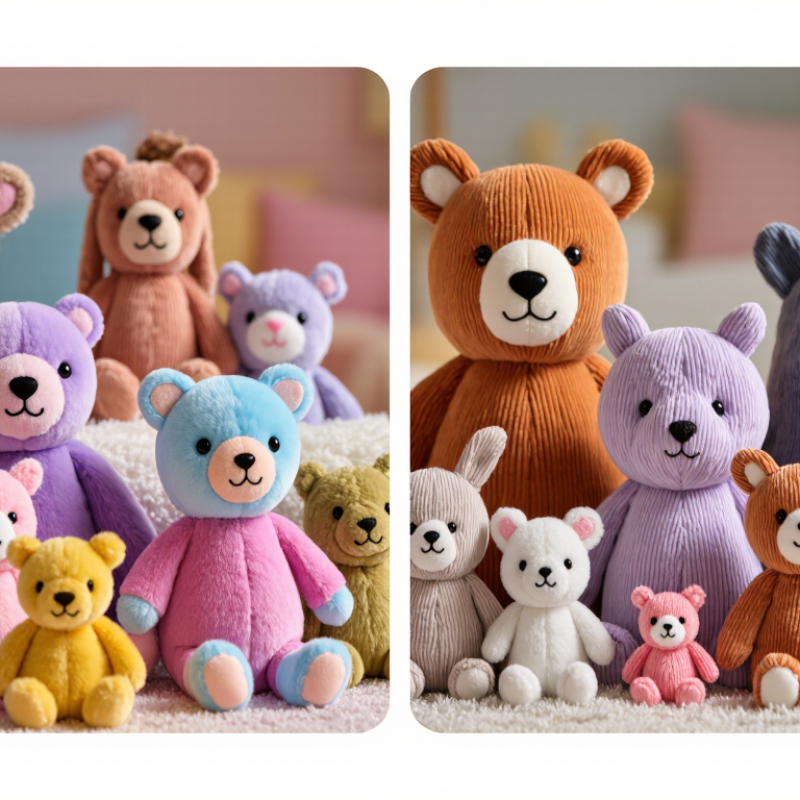
Velvet and corduroy can look similar in a toy aisle, but their structures differ sharply. Velvet usually has a dense, short pile formed from cut loops. Its surface feels smooth and reflects light in changing directions. Corduroy also uses cut pile, but narrow raised ribs remain visible. These ribs are called wales. They create a firmer, more directional hand feel.
Textile Exchange’s Materials Market Report 2024 estimates that global fiber production reached about 124 million tonnes in 2023. Polyester represented roughly 57% of that volume. This matters because many toy velvets and corduroys use polyester fibers for softness, color stability, and lower moisture absorption. In practical sampling, velvet often hides small stains within its shading. Corduroy shows pressure marks more clearly, especially across its wales. That is useful for character details, but less forgiving after rough handling. Neither fabric is automatically safer or stronger. Backing quality, seam density, pile height, and dye performance can change the result.
Tips: Rub a fabric swatch against a cotton cloth 20 times. Check for color transfer, flattened pile, loose fibers, and seam distortion. Then brush the surface in both directions. Velvet may recover unevenly. Corduroy can trap crumbs between its ribs. AATCC colorfastness methods offer a more controlled evaluation than visual judgment alone. Still, laboratory results may not predict every child’s play pattern. I once preferred a softer velvet sample, but its crushed areas looked worn quickly. That small surprise deserves attention.
| Comparison Dimension | Velvet | Corduroy |
|---|---|---|
| Basic Fabric Structure | Typically a woven pile fabric with a short, dense pile created by additional yarns. The pile is cut to produce a smooth, raised surface. | A woven pile fabric with raised lengthwise ribs called wales. The ribs are formed by cut pile, while the base remains woven and stable. |
| Visible Surface | Continuous and generally smooth, without regular lines. It may show shading when the pile is brushed in different directions. | Clearly ribbed, with parallel ridges and recessed channels running along the length of the fabric. |
| Pile Arrangement | The pile is distributed across the fabric surface, creating an even plush appearance. | The pile is concentrated in raised ribs, so the surface alternates between high and low areas. |
| Handfeel | Usually soft, smooth, and plush, with a luxurious surface feel. | Usually soft but more textured and structured because of the raised wales. |
| Visual Character | Elegant, smooth, and slightly lustrous. The appearance can change with the direction of the pile. | Casual, tactile, and visibly dimensional. The wale pattern is the defining visual feature. |
| Surface Friction | The smooth pile can feel slippery compared with ribbed fabrics, especially when the pile is short and closely set. | The ribs create more tactile grip and a stronger sense of surface texture. |
| Shape and Detail Performance | Works well for soft toy bodies, decorative panels, clothing details, and areas where a smooth plush appearance is desired. | Works well for toy bodies, ears, pockets, straps, and other parts where visible texture and a more structured appearance are useful. |
| Durability Considerations | The pile may flatten, develop pressure marks, or show directional shading after repeated rubbing or compression. | The woven base and ribs can provide a structured feel, but the raised wales may show abrasion and collect lint in the channels. |
| Lint and Dust Visibility | Lint can be noticeable because it may settle into the dense pile, particularly on darker colors. | Dust and small particles can collect between the ribs, making the channels more noticeable during cleaning. |
| Cleaning and Care | Cleaning should follow the fabric care label. Gentle washing and limited heat help reduce pile flattening and distortion. | Cleaning should follow the fabric care label. Gentle washing and careful drying help preserve the rib definition and prevent shrinkage. |
| Seam and Cutting Notes | The pile direction should be kept consistent across pattern pieces because reversing it can change the color and sheen. | The wale direction should be aligned across pattern pieces. Cutting against the rib direction can create a visibly inconsistent appearance. |
| Best Choice for a Toy | A good choice when softness, a smooth plush surface, and a more decorative or refined look are priorities. | A good choice when tactile ridges, visual structure, and a durable casual fabric character are priorities. |
| Safety and Suitability Note | For toys intended for children, select fabric and fillings suitable for the intended age group, secure all seams and attachments, and follow applicable toy-safety and care requirements. Fabric choice alone does not determine toy safety. | |
Velvet feels smooth, dense, and slightly cool at first. Touch gradually makes it feel softer. Its gentle sheen looks polished. However, it may feel slippery in small hands.
Corduroy has raised ribs that create noticeable texture. These ridges can improve grip for toddlers. It usually feels sturdy and casual. Small fingers may hold it more easily.
Velvet often looks richer because its surface reflects light. It can make ears, paws, or capes appear more elegant. Corduroy looks more crafted and relaxed. Neither style suits every child.
Corduroy often handles frequent carrying better. Its ribs can hide small scuffs. It suits toy bags, fabric blocks, and animal bodies. Velvet may work better for gentle or decorative play.
Remove loose dirt with a soft brush or low-suction vacuum. Brush in one direction. Use a barely damp white cloth for small stains. Do not scrub hard. Pressure can flatten the pile.
Use a soft toothbrush to lift dust from the grooves. Wipe marks with a damp cloth. Avoid soaking the toy. Water can affect filling, seams, or stitching. Dust hides there.
Check the care label first. If washable, use a mesh bag, cool water, and a gentle cycle. Avoid bleach and strongly scented products. Dry the toy completely before use. Damp filling can smell unpleasant.
Inspect secure stitching, attached parts, buttons, and loose threads. Confirm the toy suits the child’s age and handling. Ask about fiber content, colorfastness, abrasion, and shrinkage. Soft fabric alone does not guarantee safety.
Rub and press a sample before deciding. Check whether the pile springs back. Choose velvet for decorative softness, or corduroy for stronger grip. Texture preference varies. A child may reject “luxury.”
Understanding what is the difference between velvet and corduroy for toys starts with their surface structure. Velvet has a short, dense pile that creates a smooth, soft, and slightly shiny finish, while corduroy is made with raised, parallel ribs that give it a more textured and casual appearance. In toys, velvet often feels luxurious and gentle against a child’s skin, whereas corduroy offers a firmer, more tactile surface that can add visual interest and sensory variety.
Both fabrics can be comfortable and durable when properly made, but their performance depends on pile quality, stitching, and regular use. Velvet may show pressure marks or attract lint, while corduroy’s ridges can collect dust and may require careful brushing. Routine cleaning should follow the toy’s care instructions, using gentle methods and thorough drying. Velvet is well suited to soft, cuddly, or decorative designs, while corduroy works especially well for toys that benefit from texture, structure, and a classic handmade feel.

 Harbor Textiles