Why Are the Best Fabrics Eco Friendly and Recycled in 2026?

Time:2026-10-21 Author:Oliver
0%

Why Are the Best Fabrics Eco Friendly and Recycled in 2026?

In 2026, fabric choices increasingly reflect climate evidence, resource pressure, and customer expectations. The key question is not only why are some fabrics eco-friendly and recycled, but how their benefits are measured.

Textile Exchange’s Materials Market Report 2024 recorded global fiber production at about 124 million tonnes in 2023. It projects production could reach 160 million tonnes by 2030 without stronger intervention. That growth places pressure on water, energy, land, and waste systems. The United Nations Environment Programme also estimates that textiles contribute between 2% and 8% of global greenhouse-gas emissions.

The numbers are uncomfortable.

Recycled polyester can reduce dependence on virgin fossil resources, especially when made from post-consumer plastic bottles. Recycled cotton can shorten fiber waste streams, although quality loss may limit repeated recycling. Organic cotton may reduce pesticide exposure, but it still requires land and water. No material wins every category.

William McDonough, a pioneer of circular design, says, “Waste equals food.” His principle helps explain why recycled fabrics matter in a circular economy. However, recycling claims need traceable evidence, not attractive labels. Textile Exchange emphasizes credible standards, chain-of-custody systems, and verified material inputs.

This article will examine why some fabrics are eco-friendly and recycled, while questioning common assumptions. A recycled garment can still create microfiber pollution, require energy, or travel across several countries. That contradiction deserves attention. Better fabrics are possible, but “better” depends on production, durability, care, and end-of-life recovery.
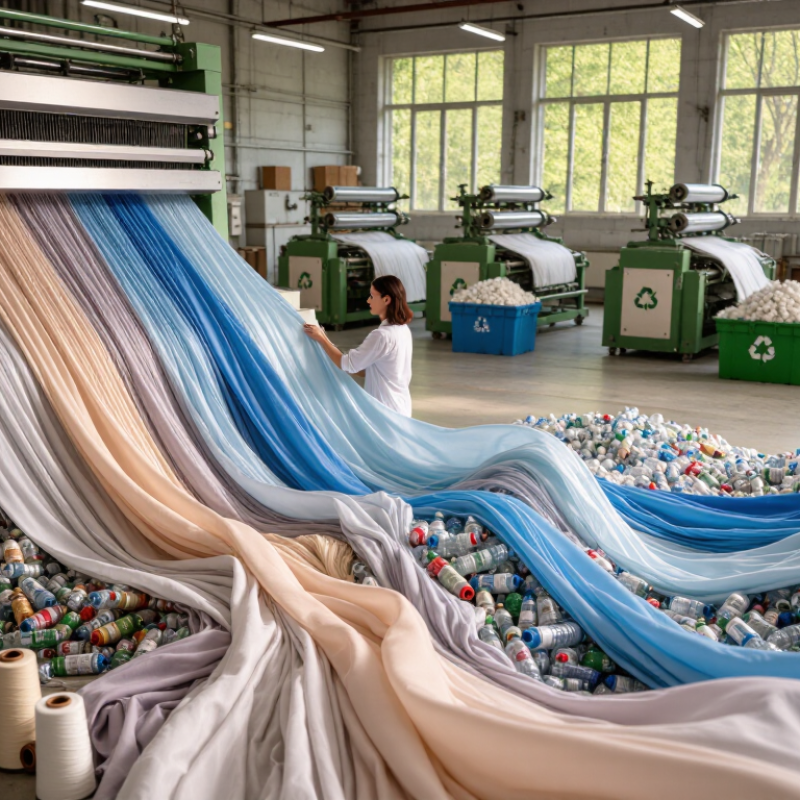
Why Are the Best Fabrics Eco Friendly and Recycled in 2026?

What Makes a Fabric Eco Friendly and Recycled?

Why Are the Best Fabrics Eco Friendly and Recycled in 2026?

An eco friendly fabric begins with responsible material choices. It may use recycled cotton, recovered wool, or regenerated fibers from discarded materials. Recycled polyester can reduce demand for new petroleum, but it is not automatically sustainable. Processing still uses energy, water, and chemicals. The full supply chain matters.

Traceability makes these claims more trustworthy. A reliable supplier should explain where the waste came from, how it was sorted, and how much recycled content remains in the final fabric. Independent testing can verify fiber content and production claims. Vague words like “green” prove very little. The label can still mislead.

Durability is another essential measure. A soft shirt that loses shape after three washes may create more waste than a less fashionable, long-lasting fabric. Look closely at the weave, stitching, color stability, and care instructions. A useful test is simple: rub the surface, stretch it gently, and inspect loose fibers. Still, no material is impact-free. Recycled fibers may shed microfibers, while natural fibers can require substantial land and water. I once viewed recycled content as complete proof of sustainability. That was too simple. Better decisions compare origin, processing, lifespan, repairability, and end-of-use options together.

How Eco Friendly Fabrics Are Produced and Processed

Why Are the Best Fabrics Eco Friendly and Recycled in 2026?

Eco friendly fabrics begin with careful material selection. Recycled polyester often starts as collected bottles or discarded textiles. Workers sort, clean, and shred this waste into small flakes. The flakes become pellets, which are melted and pushed through fine spinnerets. Cooling air turns the streams into continuous fibers.

Recycled materials can follow carefully controlled processes that reduce impact while still requiring responsible production.

Natural fibers follow a different path. Recycled cotton is separated, opened, and blended with stronger fibers because repeated processing weakens its length. The mixture is then carded, spun, woven, or knitted. Dyeing requires controlled temperatures and measured chemicals. Modern facilities may reuse process water, recover heat, and treat wastewater before discharge. These steps reduce impact, but they do not remove it entirely. No process is perfect.

Tips: Check recycled content percentages, traceability records, and independent certifications. Ask whether the fabric uses mechanical or chemical recycling. Review its durability, washing needs, and expected lifespan. A low-impact fabric that wears out quickly may create more waste. I still question broad “green” claims without test results. Reliable information should explain fiber origin, processing conditions, and environmental limits. Lightweight fabrics can reduce shipping emissions, yet they may need careful handling. Practical choices matter.

Which Materials Are Commonly Used in Recycled Textiles?

Recycled textiles commonly begin with polyester, nylon, cotton, and wool. Polyester is often made from used PET bottles, then melted into chips and spun into yarn. Textile Exchange’s Materials Market Report 2024 estimated recycled fibers represented about 7.6% of global fiber production in 2023. Recycled polyester supplied most of that volume. A bottle-derived shirt can feel smooth and dry, but it still sheds microfibers during washing.

Recycled nylon usually comes from discarded fishing nets, carpet waste, and industrial scraps. It offers strength for swimwear, outerwear, and durable bags. Cotton waste has a softer story, but a harder process. Mechanical recycling shortens cotton fibers, so manufacturers often blend them with stronger fibers. Textile Exchange also reported global fiber production reached roughly 124 million tonnes in 2023. That scale shows why recycling alone cannot solve fashion’s material problem. Data can vary between reports, and “recycled” does not always mean closed-loop.

Tips: Check the fiber percentage and source. Look for post-consumer content, not only factory scraps. Wash less often, use cold water, and choose a laundry bag that captures fibers. A recycled fabric is useful, not perfect. Its dyeing, blending, transport, and end-of-life still need scrutiny. Real-world testing matters too: some recycled fabrics pill sooner, while others remain strong after repeated washing.

Why Are the Best Fabrics Eco-Friendly and Recycled in 2026?

Recycled textiles commonly use polyester from post-consumer PET bottles, cotton and wool from textile waste, and polyamide from recovered industrial materials and fishing nets. The chart shows the global fiber production mix in 2023, highlighting the materials with the greatest potential for recycled alternatives.

Polyester represented approximately 57% of global fiber production in 2023, making recycled polyester one of the most widely used recycled textile materials. Cotton accounted for about 19%, while manmade cellulosic fibers, polyamide, polypropylene, wool, and other fibers made up the remaining share. Recycled content can reduce dependence on virgin resources, but environmental performance also depends on durability, chemical processing, energy use, and end-of-life recycling.

Source: Textile Exchange, Materials Market Report 2024. Shares are rounded global estimates for 2023.

Why Sustainable Fabrics Matter for the Environment and Society

Why Are the Best Fabrics Eco Friendly and Recycled in 2026?

Sustainable fabrics matter because clothing affects water, energy, waste, and human lives. During factory visits, I have seen how fabric choices change daily production conditions. Recycled fibres can reduce demand for newly extracted resources. They may also keep plastic bottles or discarded textiles away from landfills. Cleaner dyeing systems can lower water pollution and protect nearby rivers. However, a recycled label alone proves little. The material may require high energy, travel long distances, or release microfibres during washing. It needs evidence.

Environmental responsibility must include society. Workers deserve safe buildings, fair pay, reasonable hours, and protective equipment. Independent audits can identify risks, but audits are not perfect. Transparent suppliers should share test results, fibre sources, wastewater records, and workplace policies. These details help buyers judge real performance instead of trusting attractive claims. Local communities also benefit when factories manage chemicals carefully and reduce water competition.

Durability matters too. A strong shirt worn for years may create less waste than a fragile recycled garment. Designers should consider repair, reuse, and end-of-life recycling before choosing blended fibres. Some blends perform well, yet they can be difficult to separate later. I still question whether every “eco” improvement is genuinely better. Data can be incomplete, and factory conditions can change after an inspection. Responsible decisions require practical testing, honest reporting, and attention to people behind every thread.

How to Evaluate Fabric Sustainability in 2026

Why Are the Best Fabrics Eco Friendly and Recycled in 2026?

How to Evaluate Fabric Sustainability in 2026

In 2026, sustainable fabric claims need more than attractive language. I evaluate them through evidence, production details, and expected use. Start with the fiber’s origin. Recycled content should show its percentage, source, and verification method. “Made with recycled materials” can mean very little. Ask whether the material came from factory waste, used garments, or discarded plastic. Certification helps, but it does not prove every production stage. Ask who checked the information.

Then examine water, energy, and chemical use. These figures need clear boundaries and comparable measurements. A dyeing facility using less water may still rely on high-carbon electricity. Factory location also affects transport emissions. During supplier visits, I look for wastewater records, chemical storage, and energy meters. Paperwork matters. Physical evidence matters more. Still, access to reliable factory data remains difficult, especially across complex supply chains.

Durability is often overlooked. A fabric that lasts five years may create less waste than one using fewer resources but failing after several washes. Test shrinkage, color loss, pilling, and seam strength at home. Wash the sample repeatedly. Recycled synthetic fibers can shed tiny particles during washing. Natural fibers may require large amounts of land and water. No option is perfect. I sometimes favor a less impressive claim with stronger documentation. That choice still feels uncertain. The uncertainty deserves attention, not polished marketing.

Why Are the Best Fabrics Eco Friendly and Recycled in 2026? — How to Evaluate Fabric Sustainability in 2026

Fabric Type Primary Feedstock Renewable or Recycled Input Water Profile Climate and Resource Considerations Durability and Circularity Microfiber or Pollution Risk Best Sustainability Use Case Overall Screening Profile
Recycled Polyester Post-consumer plastic packaging or discarded polyester textiles. Can contain high recycled content when verified by a chain-of-custody standard; content is not automatically 100% recycled. Generally lower than virgin polyester
Exact savings depend on feedstock, electricity, and processing.
Reduces demand for virgin fossil-based polyester and can divert plastic from disposal. It remains fossil-derived and is not biodegradable. Strong, lightweight, and widely recyclable in theory. Textile-to-textile recycling remains limited by blends, dyes, finishes, and collection systems. Medium
May release synthetic fibers during washing; garment construction and washing practices affect emissions.
Performance clothing, outerwear, bags, and products requiring strength with recycled content. High with verified recycled content
Recycled Nylon Recovered fishing nets, industrial waste, pre-consumer scraps, or discarded nylon products. Recycled input can replace part or all of virgin nylon, subject to verification and material availability. Generally lower than virgin nylon
Results vary by recycling technology and energy source.
Reduces demand for virgin fossil feedstock and may recover difficult waste streams. It is still synthetic and non-biodegradable. High strength, abrasion resistance, and long service life. Recycling is complicated when blended with elastane or other fibers. Medium
Synthetic fiber release is possible during laundering.
Swimwear, outdoor equipment, luggage, and hard-wearing garments. High with durable design
Organic Cotton Cotton grown under recognized organic agricultural requirements. Renewable plant fiber. Organic standards restrict synthetic pesticides and fertilizers, but they do not by themselves guarantee low water use. Highly variable
Rainfall, irrigation, climate, soil, and farm practices determine water demand.
Supports soil-management practices that avoid prohibited synthetic inputs. Processing, dyeing, and finishing can still create significant impacts. Comfortable, repairable, and mechanically recyclable. Short fibers and blended construction can reduce recycling quality. Low persistent microfiber risk
Natural fibers can still shed lint and may carry dye or finishing chemicals.
Everyday apparel and home textiles where verified farming practices and long product life are prioritized. High when durable and verified
Conventional Cotton Cotton grown using conventional agricultural systems. Renewable plant fiber, but renewable does not automatically mean low-impact. Highly variable
Water intensity differs substantially by region and irrigation method.
Potential impacts include irrigation pressure, agricultural chemicals, soil degradation, and energy used in processing. Generally durable and recyclable when it is not heavily blended or treated. Low persistent microfiber risk
Fiber shedding and chemical residues depend on processing and finishing.
Products designed for long use, repair, reuse, and efficient washing. Medium; verify production practices
Linen Flax plant stems. Renewable bast fiber. Flax is often grown with lower pesticide requirements than many other fiber crops, but farm conditions vary. Often low to moderate
Rainfed cultivation is possible in suitable climates; retting and processing still require resources.
Biobased and biodegradable under suitable conditions. Environmental benefits depend on cultivation, retting, spinning, dyeing, and finishing. Strong, breathable, and can become softer with use. Long service life improves its environmental performance. Low persistent microfiber risk
Natural fiber lint is generally more biodegradable than synthetic fiber.
Warm-weather clothing, household textiles, and products intended for repeated use. High with responsible processing
Hemp Hemp stalks and bast fibers. Renewable plant fiber. Hemp can grow with limited pesticide use, but agricultural performance depends on region and management. Often low to moderate
Water needs vary with climate, soil, and cultivation method.
Biobased and biodegradable under suitable conditions. Benefits can be reduced by intensive processing, long transport, or chemical finishing. Strong and durable. Blends may improve softness but can make future recycling more difficult. Low persistent microfiber risk
Natural fiber shedding is generally biodegradable.
Durable apparel, canvas, home textiles, and products intended to replace more resource-intensive materials. High with verified supply chain
Lyocell Dissolved wood cellulose from managed or controlled forest sources. Biobased regenerated cellulose. Responsible forestry verification is important because cellulose is not automatically sustainable. Usually favorable in fiber production
The solvent-based process is designed for high solvent recovery; actual performance varies by facility.
Can reduce reliance on fossil feedstocks. Forestry, chemical recovery, energy use, dyeing, and finishing determine the total impact. Soft, breathable, and suitable for durable garments. Blends and finishes can reduce recyclability. Low persistent microfiber risk
Regenerated cellulose fibers are generally more biodegradable than synthetics, depending on finishes and conditions.
Soft apparel, underwear, bedding, and products requiring a smooth hand feel without using fully synthetic fibers. High when forest source is verified
Virgin Polyester Fossil-based petrochemical feedstocks. Not renewable and not recycled. New fossil resources are used to manufacture the polymer. Often lower than cotton by volume, but not automatically low-impact
Energy source and manufacturing technology are important.
High durability and low production water use can be advantages, but fossil extraction, greenhouse-gas emissions, and non-biodegradability remain concerns. Strong and long-lasting. Recycling is possible but collection and textile-to-textile systems remain limited. Higher concern
Can release persistent synthetic fibers during laundering.
Long-life technical products where recycled alternatives are unavailable and product durability clearly extends use. Lower priority than recycled alternatives
Wool Animal fiber from sheep and other wool-producing animals. Renewable biological fiber, but land, feed, animal management, and farming systems affect impacts. Variable
Scouring, dyeing, farm conditions, and local water availability influence results.
Biodegradable under suitable conditions and naturally durable. Possible concerns include methane emissions, land use, nutrient pollution, and animal-welfare practices. Warm, resilient, repairable, and suitable for long use. Fiber recycling is possible but sorting and quality loss can be challenges. Low persistent microfiber risk
Natural fibers generally biodegrade more readily than synthetic fibers.
Long-life knitwear, coats, insulation, and products designed for repair and repeated wear. Medium; farm practices are decisive

How to read this table: No fabric is sustainable in every situation. A reliable 2026 assessment should consider the complete life cycle: raw-material origin, agricultural or recycling practices, manufacturing energy, water use, chemical management, durability, washing, repair, reuse, and end-of-life options. “High,” “Medium,” and “Low” are comparative screening profiles, not universal environmental scores.

Verification priorities: Check recycled-content claims through a recognized chain-of-custody system; verify organic, forestry, or animal-fiber claims through applicable standards; request manufacturing data where available; and prefer durable, repairable designs with low-impact care instructions.

FAQS

How are recycled polyester fabrics produced?

Workers collect, sort, clean, and shred bottles or discarded textiles. The flakes become pellets, melt, and pass through tiny spinnerets. Cooling air forms continuous fibers. The process still uses energy.

Which materials commonly become recycled textiles?

Common materials include polyester, nylon, cotton, and wool. Polyester often comes from used bottles. Nylon may come from old nets, carpets, and industrial scraps. Sources can vary.

Is recycled cotton completely sustainable?

Not necessarily. Repeated processing shortens cotton fibers. Manufacturers often blend recycled cotton with stronger fibers. This improves durability but may complicate future recycling. The trade-off matters.

Does recycled fabric prevent microfiber pollution?

No. Recycled polyester can still shed tiny fibers during washing. Wash garments less often and use cold water. A fiber-catching laundry bag may reduce releases. It is not a perfect fix.

How can buyers check environmental claims?

Check recycled content percentages, material sources, and traceability records. Ask whether recycling was mechanical or chemical. Review testing, wastewater treatment, and processing conditions. Broad green claims need evidence.

Why does durability matter when choosing eco-friendly fabric?

A durable shirt worn for years may create less waste. Fragile fabric can require earlier replacement. Inspect seams, surface strength, and washing instructions. Low impact is not enough.

Can dyeing and finishing affect a fabric’s environmental impact?

Yes. Dyeing uses water, heat, and measured chemicals. Some facilities reuse water, recover heat, and treat wastewater. These steps reduce harm, but they do not remove it. No process is perfect.

Do recycled fabrics also support workers and communities?

Responsible production should include safe buildings, fair pay, reasonable hours, and protective equipment. Careful chemical management can protect nearby rivers and communities. Independent audits help, but they can miss later problems. I would still ask questions.

Conclusion

In 2026, the question “why are some fabrics eco-friendly and recycled” is increasingly important as consumers and manufacturers seek to reduce waste, pollution, and resource consumption. Eco-friendly fabrics are designed with lower environmental impact, using renewable, recycled, biodegradable, or responsibly managed materials. Their sustainability also depends on how fibers are grown, collected, sorted, cleaned, spun, dyed, and finished. Efficient production methods can reduce water use, energy demand, chemical pollution, and textile waste while maintaining comfort and durability.

Common recycled textile materials include recovered cotton, polyester made from used plastic, regenerated cellulose fibers, and recycled wool or nylon. These materials can help extend the life of existing resources and reduce dependence on newly extracted raw materials. Sustainable fabrics also matter socially because responsible production can support safer workplaces, fairer supply chains, and more thoughtful consumption. To evaluate fabric sustainability in 2026, readers should consider the material source, recycled content, manufacturing process, durability, certifications, care requirements, and end-of-life options rather than relying on a single environmental claim.

Oliver

Oliver

Oliver is a seasoned marketing professional with a wealth of expertise in driving brand awareness and engagement. With a deep understanding of our company's product offerings, he consistently delivers high-quality content that enriches our professional blog. His insights not only shed light on......