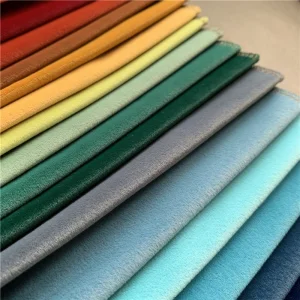
Taffeta is no longer a niche heritage textile. It has become a strategic material category across fashion, interior architecture, event design, and industrial technical textiles. For buyers sourcing at wholesale scale, China remains the dominant origin — not merely on price, but on process depth, loom density, and the ability to convert complex specifications into repeatable production.
High-luster taffeta for structured gowns, eveningwear, corsetry linings and couture volume. Crisp hand-feel recovers shape after folding — a critical attribute for export packaging.
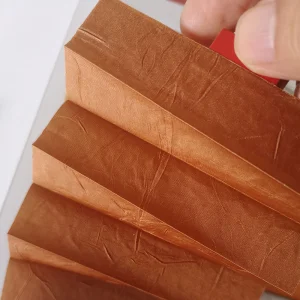
Drapery, roman blinds, cushion shells and layered valances. Taffeta's body supports pleat memory and delivers a desirable papery rustle that premium interiors markets pay for.
Table overlays, chair sashes, stage backdrops and ceiling drapes. Taffeta reads as luxury at distance and photographs with a controlled, non-plastic sheen.
Ribbon reinforcement, label backing, bag linings and decorative lamination. Taffeta's dimensional stability makes it a dependable substrate for converting lines.
The term "taffeta" describes a plain-weave fabric with a fine, closely packed warp and a heavier, coarser weft. The structural contrast between warp and weft creates the characteristic crispness, the subtle crosswise rib, and the faint rustle that has defined the fabric since its Persian origins. When buyers search for silk fabric taffeta, they are usually describing one of three material families:
Woven from 100% mulberry silk filament, typically 16–22 momme. This is the premium tier used for bridal couture and heirloom drapery. It is lustrous, has strong shape memory, and holds dye with extraordinary depth. Its cost structure is driven by raw silk pricing and the slow loom speed required to prevent wear on delicate filaments.
Blends are the commercial sweet spot for wholesale buyers. A silk-cotton taffeta reduces cost while keeping a natural hand and improved breathability — ideal for mid-market bridal and hospitality textiles. Silk-viscose versions increase drape softness for ready-to-wear uses.
This is the highest-volume export category. Modern polyester taffeta can be engineered to mimic pure silk luster with superior colorfastness, UV stability, and machine-wash performance. Recycled rPET taffeta has expanded rapidly as EU and North American buyers respond to Scope 3 and packaging-regulations pressure.
Wholesale taffeta is specified by weight (g/m² or momme), width, weave density, finish (calendered, anti-static, IFR), and colorfastness grade. A reliable Chinese supplier will quote all four simultaneously — not just a price per meter.
Directional indicators from textile trade flows, sourcing behavior, and category demand — useful when building a 12–24 month taffeta procurement plan.
Buyers who still treat China as a pure cost play are missing the actual competitive advantage. The efficiency of Chinese taffeta production is structural, and it shows up in the hidden costs that never appear on a quotation sheet.
Yarn texturing, weaving, dyeing, finishing, and packaging sit within hours of each other in clusters such as Shaoxing, Suzhou, and the Pearl River Delta. This proximity compresses lead time dramatically and enables rapid iteration — a buyer can adjust a finish or color and have a counter-sample within days rather than weeks.
Water-jet and air-jet loom density in China allows high-volume runs without the quality drop-off that occurs when mills stretch capacity. For taffeta — where a single warp irregularity is visible under light — this consistency is decisive.
Chinese mills increasingly accept low-MOQ customization for finish, width, and color, which lets small and mid-sized brands test taffeta collections before committing to full container volumes. Shenzhen-based suppliers such as Shenzhen Harbor Textiles Co., Ltd. operate as a conduit between that factory flexibility and the buyer's commercial requirements.
Export-ready Chinese taffeta suppliers routinely provide OEKO-TEX® documentation, GRS chain-of-custody for recycled inputs, test reports for colorfastness and shrinkage, and full packing documentation. For compliance-driven buyers in the EU and North America, this maturity reduces onboarding friction significantly.
| Efficiency Lever | Buyer Impact |
|---|---|
| Integrated dyeing & finishing | Faster color approval, lower sample cost |
| High loom density | Consistent hand-feel and shade across reorders |
| Flexible MOQ | Lower inventory risk for emerging brands |
| In-house QC labs | Fewer chargebacks and quality rejections |
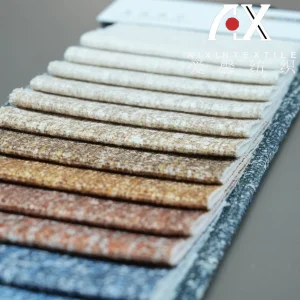
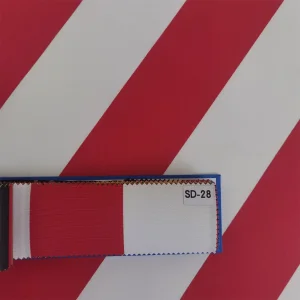
A curated selection of upholstery, technical, and lifestyle fabrics that complement taffeta-based programmes — available with OEM customization and export documentation.
Search intent around taffeta is converging on four commercial questions. Understanding them helps buyers benchmark suppliers — and helps suppliers demonstrate the right information gain.
Most serious buyers open with a sample brief. Supplier response time and accuracy is the real first filter.
Headline MOQ is often misleading. Ask about dye-lot MOQ separately from greige-order MOQ.
OEKO-TEX®, GRS, and REACH alignment are now baseline expectations for EU-facing programmes.
Unit price ignores freight, duty, and waste rate. Buyers increasingly evaluate landed cost per finished garment.
rPET taffeta has moved from novelty to mainstream in retail programmes. Buyers are requesting GRS chain-of-custody documentation and looking at bio-based polyester pilot lines as part of Scope 3 planning.
Performance finishes — anti-static, IFR (inherently flame retardant), water-repellent, and anti-crease — are now the primary differentiator. A taffeta that meets a fire code in hospitality venues commands a meaningful premium over an untreated equivalent.
Buyers are adding regional suppliers for short-run needs while retaining Chinese suppliers for core volume and complexity. The net effect is that reliable Chinese suppliers are becoming strategic rather than transactional partners.
Test reports, mill audits, and dye-lot traceability are being used as marketing assets by brands. Suppliers who can provide documentation proactively win the longer, more profitable contracts.
Chinese mills have adopted digital color-matching and virtual rendering, compressing approval loops from weeks to days. This directly affects time-to-market for seasonal collections.
Taffeta's performance varies meaningfully by region and use case. Matching specification to local conditions is a hallmark of experienced sourcing.
High demand for GRS-certified recycled taffeta in bridal and hospitality. OEKO-TEX® compliance is expected, and buyers frequently request REACH-aligned documentation.
Focus on event and interior applications. Buyers prioritize colorfastness, wrinkle recovery for shipping, and reliable reorder consistency across dye lots.
Strong demand for luxurious drapery and event taffeta with UV stability, high luster, and heat resistance for hospitality environments.
Cost-sensitive volume programmes for uniforms and decorative linings. Preference for machine-washable polyester blends with quick lead times.
Growing bridal and event market; buyers value flexible MOQ and reliable shipping with consolidated packaging options.
Extreme color-precision and shrinkage control requirements. Buyers generally prefer higher-specification greige and accept higher unit prices.
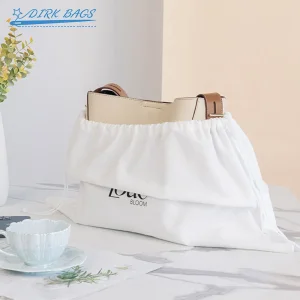
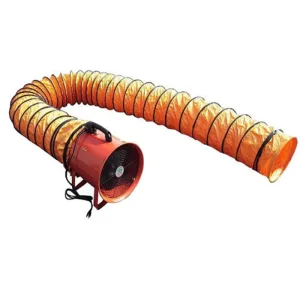
Complete your sourcing basket with complementary technical textiles, decorative materials, and packaging solutions — all coordinated for consolidated shipment.
 Harbor Textiles